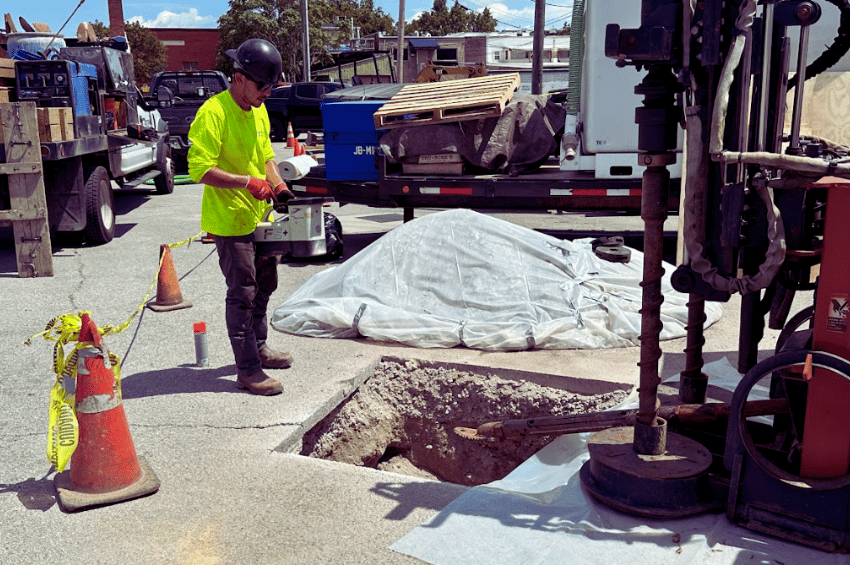
Protecting Groundwater and Controlling Subsurface Flow with Horizontal Wells
Directional Technologies designs and installs horizontal groundwater recovery and hydraulic control systems that provide long-term containment and treatment of contaminated groundwater. Our approach combines precision directional drilling with advanced environmental engineering to achieve maximum hydraulic control while minimizing surface disruption.
Horizontal wells are ideal for Superfund sites, landfills, and complex remediation projects where vertical systems have failed or are not feasible due to geology, accessibility, or cost.
Challenges in Groundwater Control
Traditional vertical groundwater recovery networks can lose efficiency over time due to mineral buildup, fine-grained formations, or changing subsurface conditions. These issues often lead to:
Reduced hydraulic capture zones
Inconsistent groundwater recovery
Blockages and maintenance challenges
Increased operational costs
Incomplete protection of off-site receptors
At several sites regulated under state and federal programs, Directional Technologies has provided engineered horizontal solutions to restore performance and achieve full regulatory compliance.
Our Horizontal Groundwater Solution
When an existing vertical groundwater recovery system at a Superfund site began to fail, Directional Technologies engineered a horizontal leachate collection well to replace and improve hydraulic control.
The project involved installing an 800-foot horizontal stainless steel well approximately 36 feet below ground surface, designed to intercept and extract contaminated groundwater and landfill leachate. The well was equipped with a pumping system that directed recovered fluids to an on-site pretreatment facility before discharge to a publicly owned treatment works (POTW)
Before activation, the horizontal well underwent an extensive development phase to remove drilling fluids and maximize yield. Due to the unique formation characteristics and screen design, Directional Technologies’ environmental drillers applied advanced development techniques that increased well yield by more than 600%, significantly improving hydraulic performance and long-term recovery capacity
Advantages of Horizontal Groundwater Recovery Systems
Continuous hydraulic control over extended subsurface areas
Greater contact with target contamination zones
Reduced surface footprint and operational impact
Ideal for landfills, industrial facilities, and Superfund sites
Compatible with leachate collection and groundwater recovery systems
Proven effectiveness in fine-grained and mineralized formations
Why Directional Technologies
Directional Technologies has over 30 years of experience designing and installing horizontal wells for groundwater and vapor control. Our team has completed thousands of projects across North America, providing innovative solutions to complex environmental challenges.
We partner with consultants, engineers, and regulators to ensure every system meets performance, safety, and compliance objectives.
Water Mains
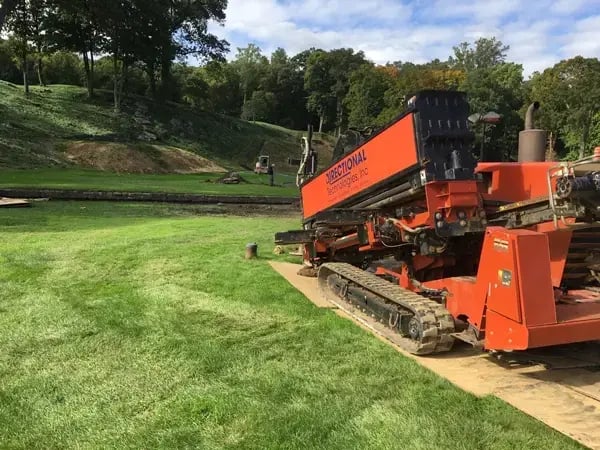
Horizontal directional drilling is the less messy, more precise technique for the installation of utility water lines. As opposed to traditional trenching installations, water lines can be installed at various lengths and sizes while avoiding existing infrastructure.
The purpose of a utility water line is to move water from one location to another. Sometimes providing the means to move that water around is more difficult than it seems. Horizontal directional drilling (HDD) is a trenchless technology used to install utility water lines and other underground pipes without the need for extensive excavation. This method involves drilling a pilot hole along the predetermined path, gradually enlarging it, and then pulling the utility line through the drilled borehole.
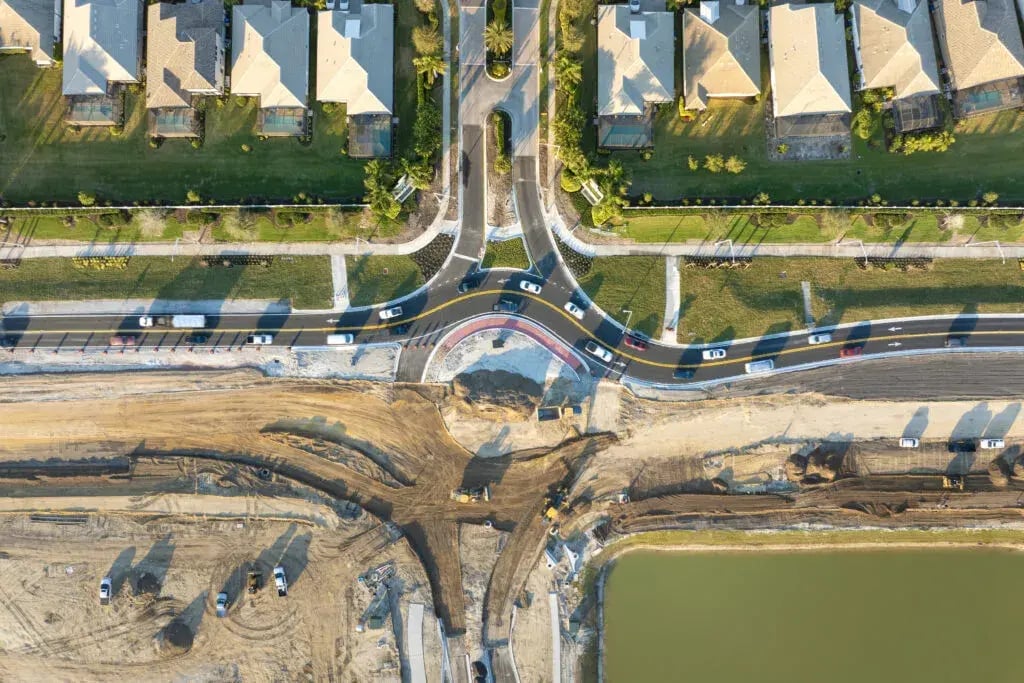
If someone needs water, they likely need it now. HDD often leads to faster project completion with fewer post-installation restoration needs. Even at a small-scale, residential application, HDD can maneuver beneath existing driveways and around subsurface utilities to precisely install the utility water line where it needs to be. On projects like this, it is not just the client’s home that is affected by these installations. The trajectory of the water line may travel beneath several neighboring properties, or city rights-of-way, where it is far less troublesome to take an HDD approach rather than trenching through.
A project of this scale would likely require a smaller-diameter pipe to be installed, which would tie into a larger utility water line network. However, HDD can be used for the installation of large diameter utility water lines as well, which may be responsible for providing clean water to an entire city. In this situation, the borehole is simply reamed to an appropriate diameter for the larger-size pipe to be safely installed.
HDD is particularly useful in situations where the line must be installed in environmentally sensitive areas, such as wetlands. It is nearly impossible to trench through environments like this, as contractors are forced to jump through logistical and permitting hoops. Rather than reorganizing the entire layout of the utility water system, HDD can install the conduit through these zones without any disturbance to surface-level features.
Horizontal directional drilling techniques are the preferred method for utility water line installations. In the long run, the HDD application is both time-efficient and cost-effective.
Call an HDD Expert Today!
Have a project or interested in learning more about how horizontal remediation can help you achieve site closure?