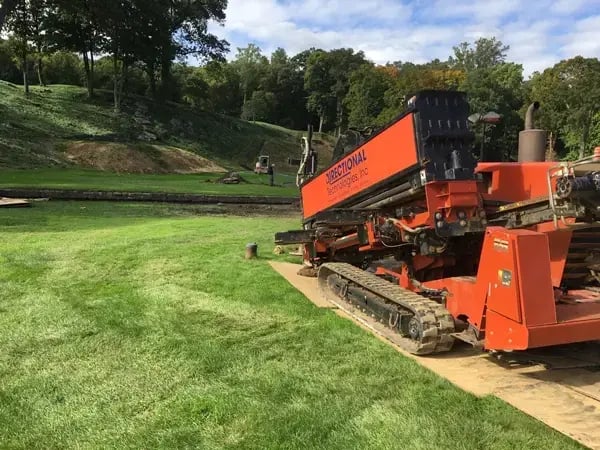
Due to the unique installation process and significant screen footage per well, it is imperative to team up with an experienced horizontal remediation specialist to get the highest level of performance out of your horizontal wells. Directional Technologies has over 30 years of experience working with environmental consultants to design and install horizontal remediation wells at challenging sites across the country and internationally.
Horizontal remediation wells are an extremely efficient method for cleaning up contamination in the subsurface, as long as the design and build of those wells are performed correctly.
Directional Technologies has been at the forefront of contaminant remediation as it applies to horizontal settings, having pioneered many of the design techniques and installation methods used to maximize remedial effectiveness on site. Working with environmental consultants, Directional Technologies takes a team approach to design efficient horizontal remediation wells, and then drills and installs the wells through the trusted hands of our specialized master drillers.
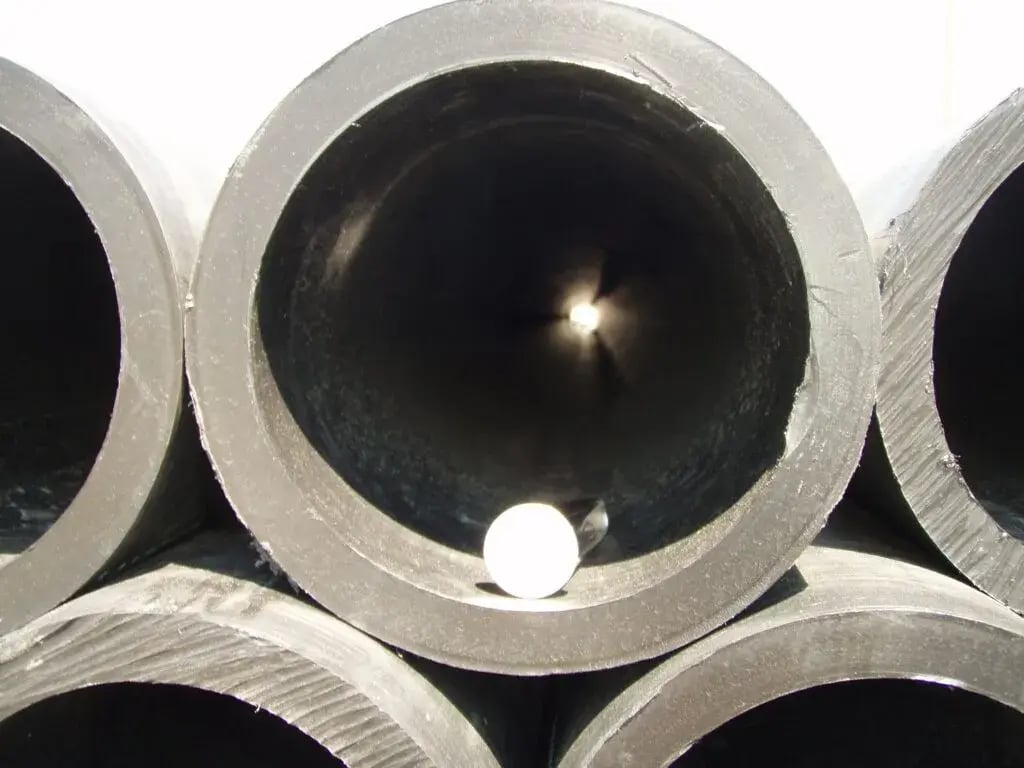
The main difference between horizontal wells design and vertical wells (besides the obvious orientation change), is the amount of screen. On average, horizontal wells contain 10 to 100s feet of screen compared to an average of about 10 feet for most vertical remediation wells. Most vertical wells are constructed of prefabricated materials with screen slotting sizes that come off-the-shelf at standard sizes, such as 0.010” or 0.020.” This is appropriate for vertical wells since the remedial application (air flow, injection solution, etc.) only has to be dispersed across a small section of the screen.
Since horizontal wells contain so much more screen footage, the effects of these off-the-shelf materials do not translate from vertical applications to horizontal. We need to ensure that flow is evenly distributed along the entire length of the screen to maximize the remedial effectiveness of the well. To achieve maximum performance, Directional Technologies utilizes a proprietary, in-house screen-modeling software to assist with the modeling and design of the well.
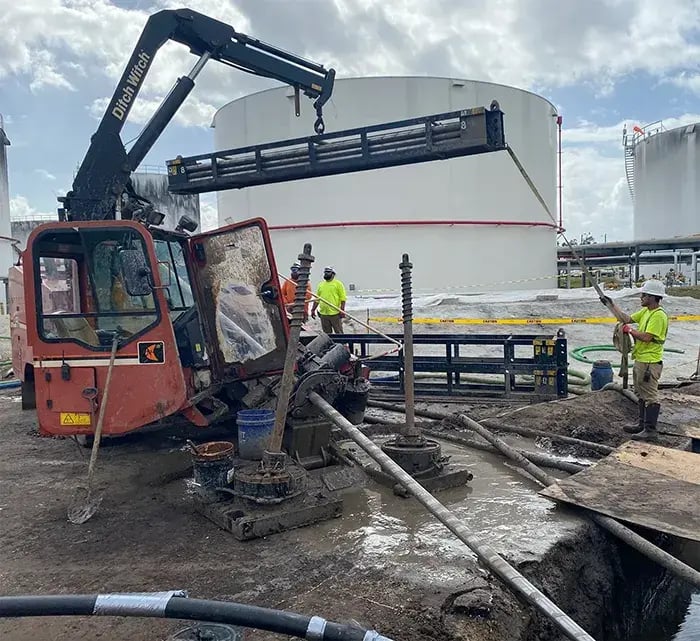
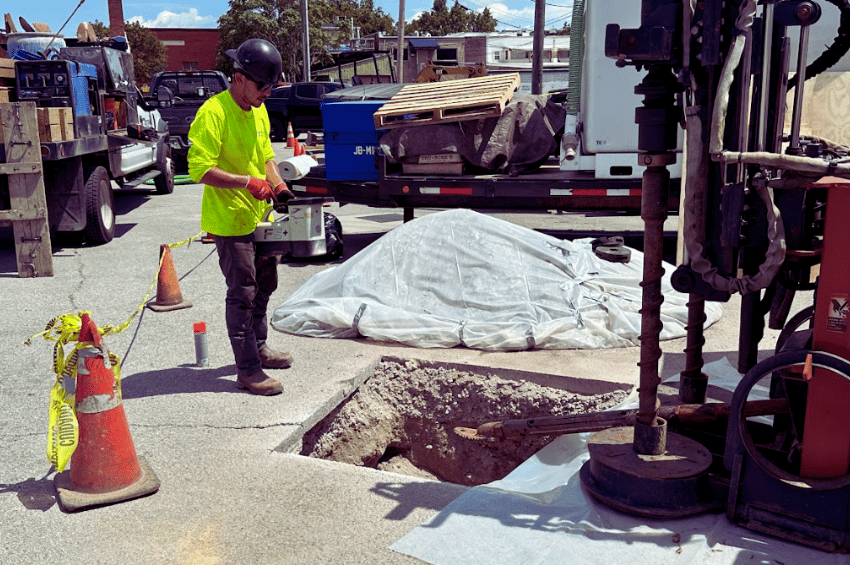
Following the design phase, the Directional Technologies drilling team mobilizes to the site and performs the drilling and installation of the horizontal remediation wells. Our expert drillers are veterans when it comes to working in contaminated soil and groundwater. They are able to precisely navigate the subsurface to ensure that the well screen is being installed directly into the target zone. As a result, there is maximum contact between the screen portion of the horizontal well and the surrounding contaminated zone.
Designing horizontal well screens is a critical part of the process to ensure that the remedial application is applied to the entire target zone. Since each site is unique, Directional Technologies takes a site-specific approach to each design and build process for each horizontal well that they install.
Horizontal Bore Design
Every site is unique and every horizontal bore design and installation method should be selected to address the characteristics of the site.
Drawing upon the experience of the engineer and directional driller, as well as meeting the needs of the client are essential. With this as a caveat, the following have been described by directional boring designers and constructors:
Under good conditions, an experienced horizontal directional driller can install 200–300 ft of pipe per day.
A setback is needed for entrance and exit points of the horizontal bore and must be included in the total length of the borehole. Setbacks range from 3 to 5 feet for each foot below grade of the installation. For example, for a placement 5 feet below grade, include 15 to 25 feet of horizontal boring on each side of the installation for the setbacks.
Accuracy of monitoring and placement of boreholes less than 30 feet below grade is measured in inches.
Mobilization and set up usually takes less than an hour for a horizontal borehole.
Cobbles are the nemesis of the directional driller, because cobbles can deflect drill strings. Difficult-to-penetrate conditions increase the time needed to complete a project and increase costs.
Designing Horizontal Well Screen
Designing a horizontal well screen begins after the consulting engineer determines that the project site, the contaminant, and the remediation goals are conducive to a Horizontal Remediation Well system. Once the horizontal well screen design is completed, a horizontal well pipe slotter is contacted and given the engineered specifications. The horizontal well screen is then manufactured and shipped to the project site.
What’s Needed for Designing a Horizontal Well Screen?
If not already provided, Directional Technologies will request the following information for the design of the horizontal well screen:
Seasonal and historical water level data (hydrographs)
Potentiometric surface map
Vertical hydraulic head profile
Injection or extraction equipment
Operational parameters
Groundwater plume maps
Hydrogeologic cross-sections
Groundwater or soil cleanup target levels
Grain size distribution data for the target zone
Success Criteria – Custom Designed Well Screen
Horizontal well screen is custom designed to meet several competing success criteria:
Develop and specify detailed slot configuration and slot distribution that will achieve a constant extraction or injection rate along the full length of the horizontal well screen.
Optimize the development of the natural filter pack in the soil formation surrounding the horizontal well screen, particularly during extraction operations.
Adjust the horizontal well screen design to accommodate horizontal well specifications, including pipe diameter, material properties of the horizontal well pipe, riser length, conveyance lines, and elevation changes.
Properly account for known hydrogeologic properties of the target formation, including hydraulic head, hydraulic conductivity, grain size distribution, anisotropy, and heterogeneity, to the extent available, in the design of the horizontal well screen.
Allow maximum flexibility in operational parameters, including applied pressures and flow rates during both injection and extraction operations.
Introduce horizontal well screen characteristics that will facilitate the transition from injection to extraction mode and account for changes in flow rates and fluid mechanical properties of injected and extracted fluids during various phases of the remediation program.
Call an HDD Expert Today!
Have a project or interested in learning more about how horizontal remediation can help you achieve site closure?