Data Gap Elimination with Horizontal Soil Sampling
Horizontal Drilling Techniques Offer Significant Advantages When Delineating Contamination
Horizontal drilling techniques offer significant advantages when delineating contamination, particularly on environmental projects where contamination exists in limited-access locations. Several tools can be applied to horizontal technologies to ensure the contamination at the site is well-defined, such as horizontal soil sampling and the use of down-hole sensing. Traditional vertical drilling methods may be limited by obstacles such as buildings, infrastructure, or underground utilities, which present substantial data gaps in the understanding of the conceptual site model. In contrast, horizontal drilling allows for the collection of soil samples beneath structures without the need for disruptive excavation or potential damage to existing facilities. This minimizes the impact on the surrounding environment, providing a less invasive and more efficient approach.
Soil Sampling by Navigating Horizontally
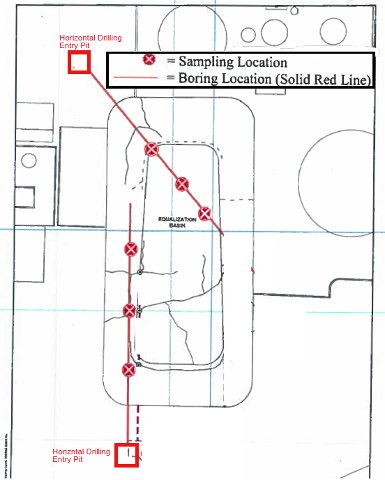
By navigating horizontally beneath buildings, drillers can target specific zones with precision, obtaining soil samples from areas that might be missed or difficult to access using conventional techniques. Where traditional vertical techniques may struggle to capture the lateral extent of contamination accurately, horizontal drilling allows for collection of samples along an aerial plane, enabling a more thorough assessment of the spread and distribution of contaminants beneath the surface. This spatially detailed information is crucial for effective remediation planning and execution. Furthermore, the non-disruptive nature of horizontal drilling reduces the impact on the surface environment, particularly when it is critical that on-site business operations continue as usual. This is especially important when working in urban or developed areas, where minimizing disturbance and reducing restoration costs is critical. By avoiding extensive excavation, the technique helps preserve the integrity of the surrounding landscape and structures, contributing to a more sustainable and environmentally friendly approach to soil sampling and contamination delineation.
Conceptual Site Model Enhancement with Horizontal Sensing Technologies
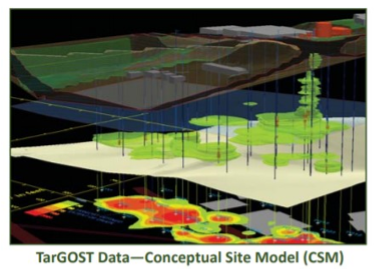
Horizontal soil sampling is an indispensable tool when delineating contamination at a site; however, the site conceptual model can be enhanced further when used in tandem with down-hole sensing technologies. DTI is fortunate to have worked with TarGOST (Tar-specific Green Optical Screening Tool) creator Dakota Technologies on previous projects where developing a full understanding of contaminant delineation was paramount. The technology functions by advancing a sensor down the borehole to take high density fluorescence measurements, which rapidly assess NAPL concentrations in real time. These measurements can be used to make real-time design adjustments in the field and to develop high-resolution conceptual models during the post-analysis phase. When implemented simultaneously with horizontal soil sampling, a fully comprehensive understanding of the contaminant distribution throughout the site is achieved.